The new eye will help us see the universe differently
For thousands of years, humans have looked at the night sky with wonder. But to truly understand the universe, astronomers needed to observe it without Earth’s atmosphere getting in the way. That led to the birth of space telescopes.
In 1990, the Hubble Space Telescope changed astronomy forever. Floating above Earth’s atmosphere, Hubble gave us incredibly sharp views of galaxies, nebulae, stars and planets. More than just beautiful pictures, its observations helped us understand the age, expansion and evolution of our universe.Then came the James Webb Space Telescope (JWST), launched in 2021. Webb was designed mainly to observe infrared light, allowing us to look deeper into the universe, study the earliest galaxies and see stars and planets forming through clouds of dust.
But there was still something astronomers needed.
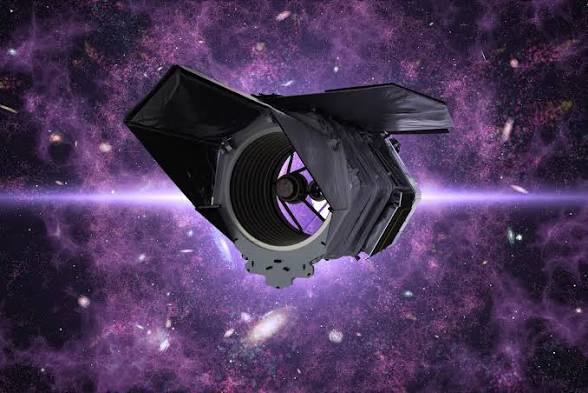
A telescope that could see a much larger area of the sky at once.That is where the Nancy Grace Roman Space Telescope comes in.
Why Do We Need Roman?
Think of it this way: Hubble and Webb are excellent at taking detailed cosmic portraits. Roman is designed to create a vast cosmic map. Roman’s Wide Field Instrument can see an area of sky at least 100 times larger than Hubble’s in a single observation. This means it can survey enormous regions of the universe much faster. Instead of looking at one small patch for a long time, Roman can scan huge areas and find thousands or millions of interesting objects for astronomers to study.
The Nancy Grace Roman Space Telescope launched on August 30, 2026, aboard a SpaceX Falcon Heavy from NASA’s Kennedy Space Center in Florida. But launch is only the beginning. Roman now has to travel toward L2. From there, Roman will orbit the Sun while remaining near L2, giving it a stable environment for its observations, deploy and test its systems, calibrate its instruments and prepare for scientific observations.
What Will the Nancy Grace Roman Space Telescope Study?
The Nancy Grace Roman Space Telescope will explore some of the biggest mysteries of the cosmos. It will observe vast areas of the sky in infrared light, helping astronomers study dark energy and dark matter, and understand how galaxies and the cosmos have evolved. Roman will also search for exoplanets, including distant and rogue planets, using gravitational microlensing. It will study millions of stars in our Milky Way, investigate black holes and observe supernovae to learn more about the expansion of the cosmos. With its wide field of view, Roman will complement telescopes like Hubble and James Webb, providing a larger and more detailed picture of our cosmos.